Making the Department of Energy & Climate Change sustainable
What DECC is doing to reduce waste and emissions.
Overview
The Department of Energy & Climate Change (DECC) has been engaged in an ambitious and wide-reaching programme to reduce its energy consumption and increase its overall sustainability since its creation on 3 October 2008. We have made significant reductions in our emissions from the department’s estate and business travel. Emissions from our London HQ have been reduced by 50% in the last 3 years. We plan to reduce our emissions even further, as well as targeting water and waste.
Greening Government Commitments
The Greening Government Commitments (GGCs) are the UK government’s commitments for delivering sustainable operations and procurement for the current parliament (to 2015). More detail on the GGCs can be found on Defra’s Sustainable Development in Government website.
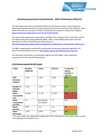
You can download the DECC performance figures for the year 2011 to 2012:
Carbon management in DECC
DECC launched its first ever Carbon Management Plan in July 2011. This ambitious plan aims to cut carbon emissions from DECC’s estate and business travel by 25% by 2014 to 15 compared to 2009 to 10. We also aspire to a zero-carbon footprint from our estate by 2050, in line with the challenge for the rest of the UK built environment. The plan was developed with the help of the Carbon Trust and it covers the period 1 April 2010 to 31 March 2015.
A year on from its publication we have taken the opportunity to review the Plan and our progress to date. The result is a revised Carbon Management Plan which reports our performance against the targets in the Plan, outlines our carbon reduction projects for the coming year and highlights key changes to the original Plan.
Energy policy for the DECC Estate
DECC’s approach to energy use on its estate is laid out in our Energy Management Policy. To underline our commitment to energy efficiency our Energy Management System for our two main buildings, 3 Whitehall Place and 55 Whitehall, has been certified to ISO 50001 in December 2013. ISO 50001 is a relatively new International Standard that lays out the latest best practice for energy management systems developed by energy management experts from over 60 countries from across the world. DECC is amongst the first organisations to be certified to this Standard in the UK.
Environmental policy statement for DECC
The Department for Energy and Climate Change’s environmental policy statement explains what commitments the department has made to improve its environmental performance.
Energy efficiency projects in DECC
DECC has recently undertaken a major intervention, including the installation of LED lighting, to improve the energy efficiency of our main building in London, using the Mayor of London’s RE:FIT programme.
We present two case studies that detail the context for these works, the approach and measures taken and some preliminary results. The aim of these two case studies is to demonstrate DECC’s commitment to energy efficiency and carbon management as well as share examples of best practice in this area.
Past performance
DECC has been implementing a carbon reduction plan since April 2009 and measuring progress on a monthly basis. The initiatives put in place have resulted in a significant and sustained improvement in energy performance. The energy consumption from our estate and operations has almost halved over the past 3 years and our carbon emissions have fallen by more than a third.
Read more about DECC’s past performance, and the projects we have undertaken to achieve them:
The 10% challenge
On 14 May 2010, the Prime Minister committed central government to reducing its carbon emissions by 10% within 12 months. DECC worked hard to contribute to the achievement of this target, reducing its emissions by more than 21% over the target period, and contributing to a reduction across central government of 13.8%.
Read more information on these projects, and case studies from other departments that contributed to the 10% carbon emission reduction from the Government estate.
DECC’s real-time energy display
DECC’s real-time energy display went live in June 2010. Capturing electricity and gas use in our two London buildings: 3 Whitehall Place and 55 Whitehall, the online tool:
- displays real-time energy information that is updated every 5 seconds
- provides an at-a-glance view of energy use over the last 24 hours
CarbonCulture
CarbonCulture at DECC was a pilot project looking at the use of technology to engage staff and stimulate behaviour change to reduce carbon emissions and drive sustainable outcomes. DECC piloted this innovative approach in partnership with behaviour change specialists at More Associates in 2010 and 2011. During this time a range of web-based engagement tools were developed and trialled including applications, games and a blog.

CRC Energy Efficiency Scheme
As a central government department, DECC is a mandated participant in the CRC Energy Efficiency Scheme.
In the 2010 to 11 performance league table, DECC was joint first, but maintaining our position will be a huge challenge, especially as we had already reduced emissions in our London HQ by 34% in the 2 years before the start of the CRC.
Carbon Trust Standard
DECC has successfully achieved re-certification against the Carbon Trust Standard. We were originally awarded the Standard in October 2010 for our carbon reduction at 3 Whitehall Place and we have now increased the scope of our certification to include 55 Whitehall and have also added business related travel emissions. The department demonstrated a 31.5% absolute reduction in our footprint, and was found to have exemplary energy management practices.
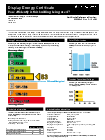
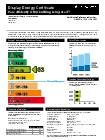
Display Energy Certificates
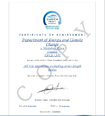
Public buildings are required to display Display Energy Certificates.
Food and catering
The government has made a commitment that departments should only procure food, subject to no overall increase in costs, which meets UK or equivalent standards of production and should publish information on this.
Catering is provided on DECC’s estate through a shared contract with Defra.
DECC departmental sustainability accounting policy
The department’s emissions accounting policies are in line with Defra guidance on how to report greenhouse gas emissions. Sustainability reporting is in line with the Cabinet Office’s GGC guidance and HM Treasury guidance on sustainability reporting in public sector accounts.
Full-Time Equivalent (FTE) figures
Prior to April 2011, our FTE figures were taken at the end of the financial year. However, to improve accuracy, from April 2011 our FTE figures are calculated quarterly for sustainability reporting purposes, as an average of the monthly figures. As the FTE figures are collected on a per building basis, we do not count the small number of staff who are not based at any of our sites, but work remotely. The FTE figures we have used are as follows:
| 2009/10 | 2010/11 | 2011/12 | |
| Core DECC | 1,258 | 1,272 | 1,356.6 |
| Nuclear Decommissioning Authority (NDA) | 350 | 313 | 267 |
| DECC family | 1,608 | 1,585 | 1,623.6 |
Scope 1
Emissions classed as Scope 1 are those from sources owned or controlled by an organisation. This includes emissions from fuel used on-site (e.g. gas and oil). This scope also includes emissions from vehicles owned by the organisation, though DECC do not own any vehicles. The NDA do own a small number of pool cars and the emissions from these is included in Scope 1 data.
Scope 2
Emissions in Scope 2 are those from purchased energy, including heat, steam and cooling. In DECC’s case these are the emissions from electricity consumption and the Whitehall District Heating System (WDHS).
Scope 3
These emissions can include business travel by means not owned or controlled by the organisation, waste disposal, or purchased materials or fuels. For DECC we report those emissions resulting from official business travel directly paid for by an organisation. In line with the GGCs, this does not include international air or rail travel (though DECC also reports this data separately in the Annual Report & Accounts).
Buildings
London estate: 3 Whitehall Place and 55 Whitehall
The department’s London buildings are adjacent to each other and share a single electricity supply. In order to measure the electricity consumption of each building, we have a main meter and a sub-meter for the supply to 55 Whitehall connected to our Building Management System. However, these meters are after the main transformer for the building, which on average has losses of around 1%. The electricity figures we report for these buildings are therefore around 99% of the full consumption, but we consider this to be within a reasonable margin of error, and the ability to measure the consumption in each building is worth the minimal losses.
Atholl House, Aberdeen
DECC only occupies 2 floors of this building, and do not own or manage it, so the department is allocated a portion of the building’s energy, water and waste figures, based on a proportion of floor space occupied. In 2009 to 10 this was 30%, but from April 2010 it was recalculated as 27%. While this method does not give us precise figures for the department’s actual impact, it is the best method we currently have of calculating this.
Travel
Road travel
DECC does not have any data on mileage for journeys taken by taxi or hire car, and so no reliable emissions can be calculated (though we do of course have cost data for these journeys). The department does not own any vehicles, so have no emissions to report on this front.
Where we are reporting mileage or emissions for road travel we are therefore only referring to ‘grey fleet’ travel - business travel by staff using their own vehicles - this data is available from fuel expenses claims. We use the Defra emissions conversion factor for ‘average car (unknown fuel)’ to calculate emissions in the absence of information on fuel type and engine size. DECC’s road travel emissions are quite low, so more detailed information would be of limited value, and would only have a small impact on our overall footprint.
Rail travel
For rail travel, DECC has mileage data for journeys booked through our travel provider, but do not have a mileage figure for rail journeys paid for by staff and claimed back on expenses. Journeys are divided into national and international journeys before the appropriate Defra conversion factors are applied.
Air travel
For air travel, DECC has more detailed information. Travel is split into domestic, short-haul international and long-haul international journeys. International travel is then further divided by class of travel, and the appropriate Defra conversion factors are applied. This gives us good quality data on air travel, which is important as it is responsible for most of the department’s emissions from travel.
For international air travel, it is the department’s policy to apply an uplift factor of 190% to account for the effects of radiative forcing, in line with the rules of the Government Carbon Offsetting Facility.
Waste
Waste data
Most of the waste data for the London estate is provided by the facilities management contractors. The data is reported to them for the whole complex by the waste management contractors, and they then split this 86%/14% between 3 Whitehall Place and 55 Whitehall. However, there are a number of data streams which they do not have data for, or which they did not have in our GGC baseline year of 2009 to 10.
Confidential waste and used toner cartridges
Both of these waste streams are collected separately from other waste and until April 2011 we did not have any data on them. However, from April 2011, our facilities managers have been estimating this data in the same way as they do with other waste, and including it in the reporting spreadsheet they provide to DECC. We plan to reset the baseline of our waste to take account of this.
Used cooking oils (UCOS)
We only have this data back as far as May 2011 - the start of our current catering contract. However, as this covers nearly the full financial year, this should not have a significant effect on the results. When rebaselining our waste figures, we also intend to take account of this new waste data stream.
ICT
DECC’s IT services are provided by a contractor, who own most of the equipment. However, as this is a shared contract with BIS, it is very difficult to provide accurate data for equipment from DECC. Equipment that is not needed, but has not reached end of life, is generally taken off-site and stored along with other equipment, the DECC IT team work with our IT contractor to plan how redundant equipment can be re-used in new projects or to replace equipment that has reached end of life. Equipment that has reached end of life is either kept for spare parts or securely disposed of.
Paper use
The Greening Government Commitments include a target to reduce paper use by 10% in 2011/12 compared to a baseline of 2009/10. Core DECC does not have paper use data for the baseline year as it did not start ordering paper centrally until 2011. However, the NDA do have baseline data, and so we are using the NDA’s paper use figures for reporting this against the target.
Last updated 20 January 2016 + show all updates
-
DECC environmental policy statement.
-
Revised energy management policy statement for the making DECC sustainable.
-
Latest Display Energy Certificates published.
-
Energy efficiency case studies published.
-
Updated DEC certificates for DECC buildings have been added to the guide.
-
DECC's approach to energy use on its estate is laid out in the new Energy Management Policy Statement.
-
First published.