New nuclear power: support for industry development
How the new nuclear power station programme is supported through skills development, investment, regulatory justification and the work of the independent nuclear regulators.
Overview
This guide explains the work of the government to plan for and safeguard the future energy supply, of which new nuclear power stations are an important component.
It explains the process of approving activities involving radioactive materials (known as justification), including the development of new nuclear installations and work undertaken by the UK’s independent nuclear regulators.
The information in the guide is relevant to existing as well as new operators.
National Policy Statements
We want a planning system for major infrastructure that is rapid, predictable and accountable. Planning decisions should be taken within a clear policy framework making these decisions as transparent as possible. The energy National Policy Statements (NPSs) are a basis for decision-making on individual applications for development consent for the relevant types of infrastructure.
Between November 2009 and February 2010, the Labour government consulted on 6 draft energy NPS, including nuclear. A second consultation on a set of revised draft NPSs was conducted by the coalition government between October 2010 and January 2011. Material relating to these consultations can be found in the energy NPS consultation archive.
A final set of NPSs was laid before Parliament for approval – see the guidance on National Policy Statements for Energy Infrastructure.
On 18 July 2011 the House of Commons debated and approved the 6 NPSs. On 19 July 2011, the, Secretary of State for Energy and Climate Change designated the NPSs under the Planning Act 2008.
Regulatory Justification
Before a nuclear power station is built, its design must be assessed to find out if the social, economic or other benefits outweigh the health detriment of ionising radiation. This assessment process is known as Regulatory Justification.
Decision on regulatory justification of the UK ABWR
On 11 December 2014 the Secretary of State, Ed Davey, published his decision as Justifying Authority that the nuclear reactor design, Hitachi-GE Nuclear Energy, Ltd’s UK Advanced Boiling Water Reactor (UK ABWR), should be Justified. The decision is taken by the making of regulations by way of statutory instrument and this was laid in draft in both Houses of Parliament. The decision took into account responses to the consultations on the Application to justify the UK Advanced Boiling Water Reactor and on the Proposed decision on the Regulatory Justification of the UK Advanced Boiling Water Reactor (UK ABWR) and other relevant developments.
Read the decision document and the accompanying Written Ministerial Statement.
Statutory instrument
The decision has been given effect by a statutory instrument:
This was approved by the House of Commons on 21 January 2015 and by the House of Lords on 27 January 2015.
Decision on regulatory justification of the AP1000 and EPR
On 18 October 2010 the Secretary of State, Chris Huhne, published his decisions as Justifying Authority that two nuclear reactor designs, Westinghouse’s AP1000 and Areva’s EPR, should be Justified.
Read the Regulatory Justification decisions on AP1000 and EPR nuclear reactor designs.
Statutory instruments
The decisions have been given effect by statutory instruments:
- Justification Decision (Generation of Electricity by the AP1000 Nuclear Reactor) Regulations 2010
- Justification Decision (Generation of Electricity by the EPR Nuclear Reactor) Regulations 2010
These were approved by the House of Lords on 17 November 2010 and by the House of Commons on 24 November 2010.
Public inquiry decision
The Secretary of State also published a Public Inquiry Decision explaining why, following public consultation, he made these decisions without a further inquiry or other hearing.
Consultations
These decisions followed a public consultation on proposed decisions that Westinghouse’s AP1000 and AREVA’s EPR were Justified and, previously, a public consultation on an application from the Nuclear Industry Association (NIA) for Regulatory Justification of four nuclear reactor designs including the AP1000 and EPR.
Background
Regulatory Justification is based on the internationally accepted principle of radiological protection. This states that no practice involving exposure to ionising radiation should be adopted unless it produces sufficient benefits to the exposed individuals or to society, to outweigh the health detriment it may cause.
This principle is derived from the recommendations of the International Commission on Radiological Protection (ICRP) and is included in the European Council Directive 96/29/Euratom of 13 May 1996. This sets the basic safety standards for protecting the health of workers and the general public against the dangers of ionising radiation. A revised Directive must be implemented by February 2018.
In the UK, this principle is set out in the Justification of Practices Involving Ionising Radiation Regulations 2004. These regulations require any new class or type of practice involving ionising radiation (such as nuclear power stations) to undergo a generic, high-level pre-optimisation assessment of whether the social, economic or other benefits outweigh the health detriment.
Justifying Authorities
Since nuclear energy has not been devolved to any of the Devolved Administrations, the Secretary of State for Energy and Climate Change is the sole Justifying Authority in this case and any decision will be UK-wide.
Guidance
In June 2015, guidelines were issued to provide specific advice to anyone seeking a Regulatory Justification decision in relation to new nuclear power.
Guidelines for the general application of the 2004 Justification Regulations are available in The Justification of Practices Involving Ionising Radiation Regulations 2004; Guidance on their application and administration.
In March 2008, guidelines were issued to provide specific advice to anyone seeking a Regulatory Justification decision in relation to new nuclear power: The Justification of Practices Involving Ionising Radiation Regulations 2004: Guidance for applications relating to new nuclear power.
Justification Co-ordination Committee
The Justification Co-ordination Committee (JCC) was set up by the Department of Energy & Climate Change (DECC) to help co-ordinate the views on the Regulatory Justification process of the Devolved Administrations, the Statutory Consultees and other experts.
Waste and decommissioning financing arrangements
Energy Act
In the Energy Act 2008 we legislated to ensure that operators of new nuclear power stations will have secure financing arrangements in place to meet the full costs of decommissioning and their full share of waste management and disposal costs.
Before construction begins, an operator of a new nuclear power station will have to submit a Funded Decommissioning Programme (FDP) for approval by the Secretary of State.
The independent Nuclear Liabilities Financing Assurance Board was established to provide impartial scrutiny and advice on the suitability of FDPs.
The Energy Act is supported by the following secondary legislation:
- the Nuclear Decommissioning and Waste Handling (Designated Technical Matters) Order 2010 (SI 2010/2850), which came into effect on 30 November 2010
- the Nuclear Decommissioning and Waste Handling (Finance and Fees) Regulations 2011 (SI 2011/134), which came into effect on 1 April 2011
- the Nuclear Decommissioning and Waste Handling (Finance and Fees) Regulations 2013 (SI 2013/126), which came into effect on 4 March 2013
FDP Guidance
On 8 December 2011 we published FDP Guidance for New Nuclear Power Stations. This guidance sets out principles that the Secretary of State will expect to see satisfied in the FDP prepared by an operator. It also gives information on ways in which an operator might satisfy those principles, thereby providing assistance to operators in understanding their obligations under the Energy Act 2008.
Waste Transfer Pricing Methodology
Alongside the approval of an operator’s FDP, we expect to enter into a contract with the operator regarding the terms on which we will take title to and liability for the operator’s higher activity radioactive wastes. We expect to dispose of spent fuel and intermediate level waste from new nuclear power stations in the same geological disposal facility that will be constructed for the disposal of legacy waste.
In particular this contract will need to set out how the price that the Government will charge the nuclear operator for this waste transfer service will be determined. The Waste Transfer Price will be set at a level consistent with the Government’s policy that operators of new nuclear power stations should meet their full share of waste management and disposal costs.
More information is available in the Waste Transfer Pricing Methodology for the Disposal of Higher Activity Waste from New Nuclear Power Stations published by the Government in December 2011.
Generic Design Assessment
The Office for Nuclear Regulation (ONR) and the Environment Agency (the UK’s independent nuclear regulators) are working together to ensure that any new nuclear power stations in the UK meet high standards of safety, security, environmental protection and waste management.
ONR and EA, working with NRW, have implemented a process called Generic Design Assessment which enables them to begin assessing the environmental, safety and security aspects of new nuclear power stations designs prior to site-specific applications being made.
GDA enables the regulators to get involved at the earliest stage where they can have most influence and can identify design and technical issues for the reactor designer to resolve before construction of the reactor starts. This increases regulatory effectiveness and efficiency and, for developers, helps reduce their commercial risks on costs and timescales.
GDA only needs to be undertaken once for each design. The GDA process remains an essential step on the critical path for delivering safe, secure and environmentally acceptable nuclear new build in the UK.
- In December 2012 the ONR issued a ‘Design Acceptance Confirmation’ (DAC) and the EA a ‘Statement of Design Acceptability’ (SoDA) - the full design acceptances, for EDF/ Areva’s UK EPR reactor design.
- In January 2013 DECC asked the regulators to carry out GDA of Hitachi-GE Nuclear Energy Ltd’s Advanced Boiling Water Reactor (UK-ABWR) design. In January 2014 assessment of the UK ABWR began. At the same time Hitachi-GE launched a new website to give people the opportunity to ask questions and make comments about the reactor design and to receive answers from the company. In August 2014 the regulators completed the initial GDA high level assessment of the UK ABWR GDA, publishing reports of their findings. The regulators have now begun their more detailed assessment of the UK ABWR. They are targeting completing this in December 2017 subject to acceptable and timely submissions being made by Hitachi-GE.
- In December 2011 the regulators completed their planned GDA assessments for Westinghouse’s AP1000 reactor design, identifying 51 ‘GDA issues’ that would have to be resolved to their satisfaction before the AP1000 would be considered suitable for construction in the UK. The regulators issued an interim DAC and an interim SoDA for the AP1000 that identified these issues. At that time Westinghouse chose to pause GDA work. In August 2014, at the request of Westinghouse, GDA recommenced for the AP1000 and the company is working with the regulators to complete GDA by 2017.
The Environment Agency has published a document for developers.
More detailed information on the GDA of new reactors is available on the joint regulators website.
Regulatory reform
In February 2011, the government announced that it would create a new independent statutory body, the Office for Nuclear Regulation, to regulate the nuclear industry. Pending legislation, ONR was set up as a non-statutory agency of the Health and Safety Executive (HSE) on 1 April 2011.
On 1 April 2014, ONR was established as a Public Corporation under the Energy Act 2013 which provided the framework of responsibilities and the powers of the organisation.
ONR regulates safety, security, safeguards and radioactive materials transport and, as a public corporation outside of government, has increased agility to address the regulatory demands of an expanding nuclear industry.
ONR’s changed status puts the UK independent regulator in a stronger position to fulfil its mission to provide efficient and effective regulation of the nuclear industry, holding it to account on behalf of the public.
ONR will retain the independent powers necessary to regulate the nuclear industry, but there will be a more consistent and predictable approach to regulation, and an expectation of continued commitment from industry.
Licensing, permissioning and environmental permitting
Any company that wants to build and operate a new nuclear power station must obtain a number of key site specific permissions from the nuclear regulators. These include a nuclear site licence and relevant consents from ONR and environmental permits from the Environment Agency or Natural Resources Wales.
The Environment Agency is responsible for a range of environmental permits relating to construction and operation of nuclear power stations and also for relevant “associated developments” such as workers accommodation. These include permits for radioactive discharges, cooling water discharges and the operation of stand-by generators. The EA will decide if the permits should be issued and, if so, what conditions should apply.
The Environment Agency’s work also includes:
- providing information about the environment around potential sites
- advising on the scope of developers’ Environmental Impact Assessments and providing information for the assessments
- regulating site investigation works that are needed to check sites are suitable for development
- providing pre-application advice
- responding to consultations run by government, developers and local authorities
- advising on flood and coastal risk matters for development sites
- providing advice and information to the Planning Inspectorate about planning and our regulatory matters
- regulating the sites for environmental matters during their construction, operation and decommissioning phases
The Office for Nuclear Regulation is responsible for licensing and permissioning proposed new sites for nuclear power stations. Any organisation wishing to carry out prescribed nuclear activities must apply for, and be granted, a nuclear site licence before it starts construction of a nuclear safety-related plant. The granting of a nuclear site licence is a significant step but is not itself permission to start nuclear-related construction. That requires a regulatory permission from ONR.
Supply chain and skills
The renaissance of nuclear power both in the UK and globally, coupled with the wider move to a low-carbon economy, provides major opportunities for the nuclear supply chain and skilled employment.
Nuclear is a key growth industry that provides highly skilled jobs. The 16GW of new build capacity planned by industry could support an estimated 29,000-41,000 jobs across the nuclear supply chain at the peak of construction activity.
Supply chain
The Office for Nuclear Development (OND) is working with the supply chain and nuclear reactor vendors and operators to help create and support a globally competitive UK supply chain. It will also act as a gateway to market information, contact networks, activities and organisations, to help the UK supply chain fulfil the opportunities presented by new nuclear projects.
In December 2012 we published the Nuclear Supply Chain Action Plan. This report has been developed in partnership with industry and aims to ensure that the UK nuclear supply chain is best placed to develop opportunities in both the domestic and global nuclear sectors, which in turn will provide long term jobs, growth and economic benefit.
The Nuclear Industry Association (NIA), supported by the OND, the Department for Business, Innovation and Skills (BIS), UK Trade & Investment (UKTI) and other key partners, is also leading a programme of regional and sector-based initiatives, designed to improve the capability of the UK supply chain, and raise awareness of major opportunities at home and overseas.
Skills
The government is committed to working with industry to ensure that there is a skilled workforce in place that can deliver the new nuclear programme to time and to budget without compromising the effective continuation of current operations and decommissioning.
The UK has a high level of expertise in several areas related to the wider nuclear supply chain, including decommissioning. However, the scale of the industry’s new build aspirations, the length of time since the last new build project and the high average age of the existing nuclear workforce means that it is essential to take action to prevent skills gaps developing over the course of the new nuclear programme.
The programme represents a significant opportunity to create jobs and drive economic growth across the country. At Hinkley Point C in Somerset, EDF have estimated a peak construction workforce of 5,600, with an additional 900 jobs once the plant is operational, whilst Horizon Nuclear Power parent company Hitachi anticipate a construction workforce of between 5,000 – 6,000 at both Wylfa on Anglesey and Oldbury in Gloucestershire with a further 1,000 jobs at each site once they become operational.
Nuclear Energy Skills Alliance
The development of an overarching skills strategy for the nuclear industry is the responsibility of the National Skills Academy for Nuclear, working in close partnership with the relevant Sector Skills Councils and Industry Training Boards.
The Nuclear Eenergy Skills Alliance (NESA) members are working with employers to input relevant research and labour market intelligence into a Nuclear Workforce Tool. This project will help to define industry-wide skills requirements over the course of the Nuclear Programme, acting as a crucial evidence base for skills interventions as well as supporting workforce planning.
The current members of NESA are:
- Department of Energy and Climate Change
- Department for Business, Innovation and Skills
- Welsh Government
- Nuclear Decommissioning Authority
- National Skills Academy for Nuclear
- Dalton Nuclear Institute (representing the Higher Education Sector)
- Cogent Sector Skills Council
- Construction Skills – CITB
- Engineering Construction Industry Training Board
- Semta Sector Skills Council
Informal network of EU countries interested in nuclear power generation
The aim of the network is to strengthen our cooperation with other like-minded EU countries on nuclear energy issues. This will help us to prevent and overcome any unnecessary barriers to nuclear power at the EU level, and to work together to share information and expertise in areas which support our domestic nuclear programme.
The first informal Ministerial meeting of the network took place in Paris in February 2012. The UK then organised a follow-up senior officials’ meeting in June 2012, before hosting a second informal Ministerial meeting in London in March 2013. At the most recent meeting, the twelve participating EU countries agreed a ‘Joint Communiqué on Nuclear Energy in Europe’ which set out our intention to work closely together in this area.
Informal Ministerial meeting: 12 March 2013

International co-operation
Canada
On 29 June 2015 the UK and Canada signed a Memorandum of Understanding concerning enhancing cooperation in the field of civil nuclear energy, building on the 2012 Canada-UK agreement to facilitate and promote collaboration and information-sharing within the civil nuclear power generation sector. The Memorandum of Understanding confirms a bilateral framework for collaborating on nuclear energy projects, programmes, research and development, and policies aimed at the sustainable development of civilian nuclear energy and its applications. Both countries recognise the advantages of facilitating mutually beneficial opportunities in this field.

The Republic of Korea
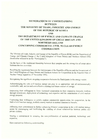
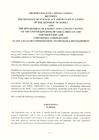
The Governments of UK and Republic of Korea have signed two Memorandums of Understanding on Wednesday 6 November 2013 to develop closer cooperation in the fields of commercial civil nuclear energy and nuclear decommissioning building on the Republic of Korea-United Kingdom Nuclear Cooperation Agreement signed in 1991. Both countries recognise the importance of reliable nuclear power generation to meet increasing energy demand and tackle climate change and see opportunities for our industries to work together in the civil nuclear sector.
China
On Tuesday 17 June 2014, the UK and Chinese governments signalled a deepening of their partnership on civil nuclear energy through the signing of a joint statement on civil nuclear power. This joint statement furthers our cooperation under the Memorandum of Understanding of civil nuclear cooperation, signed in October 2013. Both countries see the importance of working together on the UK’s nuclear new build programme, China’s own domestic civil nuclear programme and in third country markets, to maximise the billion pound opportunities this presents for both UK and Chinese companies.
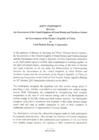
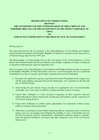
Also published on 17 June 2014, a four way MOU agreement between DECC, INS (International Nuclear Services, the commercial arm of the NDA), CNNC (China National Nuclear Corporation, whole fuel chain company and potential investor in HPC) and CAEA (China Atomic Energy Authority, the Chinese government department responsible for the nuclear fuel cycle, nuclear safety and security, and international relations):
The UK and China have a long-standing bilateral agreement to cooperate on the peaceful uses of nuclear power and both countries recognise the important role nuclear energy has in an appropriate energy mix that is sustainable, safe, secure and cost effective.
UK and Chinese governments have signed a new Memorandum of Understanding that strengthens our partnership and sets a strategic framework for working together on investment, technology, construction and expertise. It highlights the importance for both countries to work together with regards to the UK’s new nuclear build programme and China’s own domestic programme, and the opportunities for both UK and Chinese companies.
Russia
The UK and Russia committed at the UK Russia Energy Dialogue to work towards greater co-operation in the energy field, and working closer together in civil nuclear. As part of this collaboration, DECC signed a Memorandum of Understanding with Rosatom on potential working together on civil nuclear power projects, affirming each country’s expertise in nuclear and the benefits of ‘Russian and British Companies’ working together around the world to mutual commercial benefit.
Alongside the MoU, Rolls Royce, Rosatom and Fortum (Finish nuclear operating company) have signed commercial agreements which will see them work together on opportunities in the UK and, where applicable, markets of third countries.

Last updated 15 February 2016 + show all updates
-
Update to guidance page.
-
On 29 June 2015 the UK and Canada signed a Memorandum of Understanding concerning enhancing cooperation in the field of civil nuclear energy.
-
New text on Statutory instrument added.
-
An update to the Generic Design Assessment section.
-
The Governments of UK and Republic of Korea have signed 2 MoUs to develop closer cooperation in the fields of commercial civil nuclear energy and nuclear decommissioning.
-
An update to the guide with details of the MoU signed between the UK and China.
-
Publication of MoU between DECC and Rosatom
-
First published.